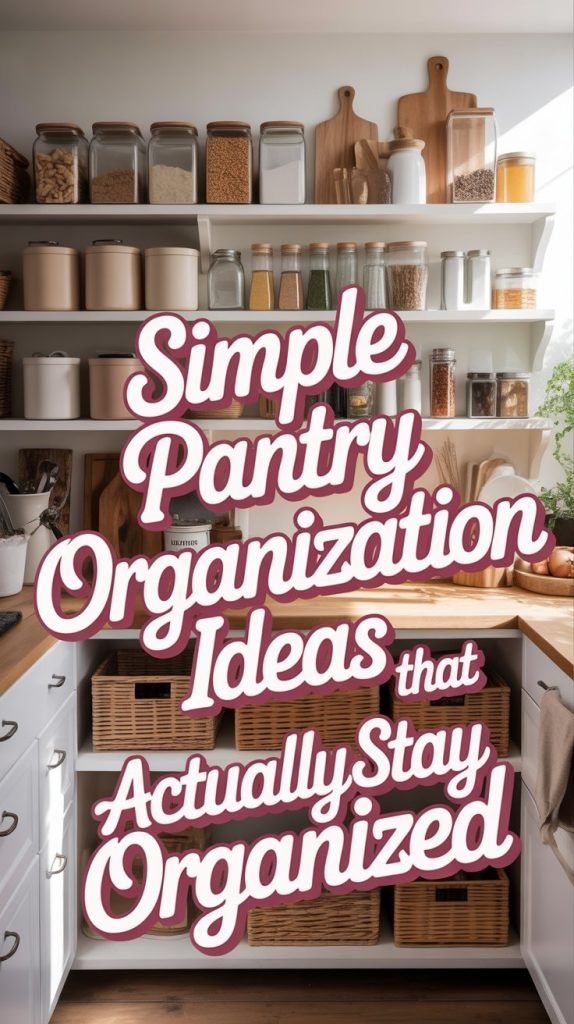
Pantry organization fails most often because it’s built for aesthetics instead of everyday habits. If your pantry only works when everything is perfectly lined up, it won’t survive busy mornings, last-minute dinners, or a full grocery haul. A pantry that stays organized is one that makes it easy to put things away correctly—even when you’re rushed. These ideas focus on creating intuitive systems, reducing friction, and organizing in a way that supports how you actually cook, snack, and restock.
1. Organize by How You Use Food (Not by Store Categories)
Most pantries fall apart because items are grouped too generically. Organizing by how you use food creates natural “activity zones” that are easier to maintain.
Create zones based on real routines:
- Weeknight meals: pasta, grains, sauces, canned beans, spice blends you use often
- Breakfast & mornings: cereal, oatmeal, nut butters, coffee/tea supplies
- Lunch & grab-and-go: snack bars, crackers, lunchbox items
- Baking days: flour, sugar, chocolate chips, leavening, extracts
- Back-stock: bulk purchases and extras
How this helps long-term:
- You grab everything you need from one spot instead of multiple shelves
- Items naturally get put back in the right place because the zones make sense
- It reduces “pantry drift,” where things slowly migrate to random shelves
Pro tip: If multiple people use the pantry, label shelves by use (“Breakfast,” “Dinner Staples”) rather than item type. It’s faster for everyone to follow.
2. Use Clear Containers Strategically (Not Everywhere)
Decanting everything looks beautiful—but it’s time-consuming and unnecessary. Focus clear containers only where they solve a problem.
Best items to decant:
- Flour, sugar, rice, pasta, oats
- Cereal and snack foods that come in bulky packaging
- Baking add-ins like nuts, coconut, and chocolate chips
What to leave in original packaging:
- Rarely used ingredients
- Short-term items
- Anything you buy infrequently
Why this actually stays organized:
- You instantly see what you’re running low on (no surprise empty boxes)
- Matching containers stack neatly and don’t collapse like bags
- Refilling becomes a quick habit instead of a full re-organization
Container tips that make a difference:
- Choose square or rectangular containers—they waste less space
- Use wide openings so scooping doesn’t create spills
- Don’t overfill; leaving a little room prevents messes
The goal isn’t perfection—it’s making your pantry easier to use every single day.
3. Keep a “Reset Shelf”
Every pantry needs a pressure-release valve—a spot where things can land temporarily without blowing up the entire system.
What a reset shelf is for:
- Groceries you haven’t sorted yet
- New items you’re not sure where to put
- Seasonal ingredients (holiday baking, party supplies)
Why this stays organized:
Instead of shoving items wherever they fit (which creates chaos fast), everything lands in one intentional place. You can reset it once a week—or even once every two weeks—without touching the rest of the pantry.
Helpful setup tips:
- Keep it at eye level so it doesn’t turn into a forgotten junk shelf
- Use one bin or tray so the mess stays contained
- Give yourself permission for it to look imperfect
4. Use Bins for Categories That Get Messy
Loose items are the hardest to keep organized long-term. Bins create instant structure.
Bins work especially well for:
- Snacks (especially kid snacks)
- Baking supplies
- Small bags and packets
- Protein bars, granola bars, drink mixes
Why this stays organized:
You’re not reorganizing shelves every time—just sliding a bin in and out. When the bin is full, it’s your cue to stop buying or to rotate items.
Extra tip: Assign one bin per person for snacks if you have kids. It eliminates constant reshuffling.
5. Label Broadly, Not Specifically
Overly detailed labels are one of the biggest reasons pantries fall apart.
Avoid labels like:
- “Crackers – Savory”
- “Kids Snacks – Sweet”
Use labels like:
- Snacks
- Baking
- Breakfast
- Dinner Staples
Why this stays organized:
Broad labels allow your pantry to evolve with your habits. When groceries change, the system still works—no relabeling required.
6. Store Back-Stock Separately
Mixing everyday items with extras makes shelves feel crowded and chaotic.
Create a simple back-stock zone for:
- Bulk purchases
- Extra cans and jars
- Party or hosting supplies
Why this stays organized:
Your main shelves stay visually calm and easy to maintain. When something runs out, you “shop” your back-stock instead of digging.
7. Leave Intentional Empty Space
An overfilled pantry is impossible to keep tidy.
Aim for:
- 10–20% empty space per shelf
- Room to set groceries down temporarily
- Space for growth between shopping trips
Why this stays organized:
Empty space absorbs real life. It prevents that constant cycle of rearranging every time you restock.
8. Make the System Easy for Everyone
If your pantry only works when you maintain it, it won’t last.
Ask yourself:
- Is it obvious where things go back?
- Can someone else reset it in under a minute?
- Does it rely on perfection—or just common sense?
Why this stays organized:
Simple systems get followed. Complicated ones get abandoned.
Final Thoughts
A pantry that actually stays organized isn’t about having the prettiest containers—it’s about reducing friction. When zones make sense, labels are flexible, and systems allow for imperfection, your pantry stays functional long after the initial organize.