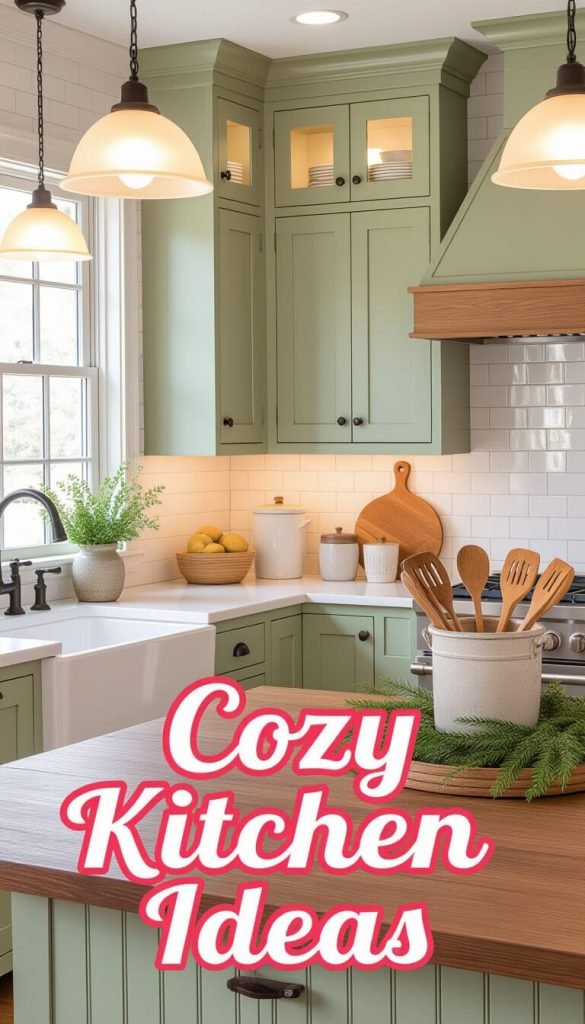
A cozy kitchen isn’t born from matching canisters or perfectly staged shelves—it comes from the little moments that make everyday cooking feel good. That warm lamp glow when you sneak in for late-night cocoa, the linen towel hanging by the sink, the herb plant you snip from while stirring pasta.
And when guests come over? A cozy kitchen becomes your superpower. It’s the place people naturally gather, snack, chat, refill their drinks, and linger long after dessert is done.
These ten ideas blend beauty, comfort, and effortless function—so cooking feels smoother, hosting feels lighter, and your kitchen becomes the heart of your home in the most natural way.
1. Layer Warm, Ambient Lighting
Lighting is the foundation of a cozy kitchen—and it’s also one of the most overlooked elements. If your kitchen ever feels harsh, sterile, or “on display,” it’s usually because all the light is coming from one source overhead. Cozy kitchens rely on layers of light that create depth, softness, and atmosphere.
One of the biggest shifts in my own kitchen happened when I added under cabinet lighting with LED strips. Suddenly, evenings felt calmer. Cleanup felt quieter. And when guests came over, they naturally gravitated toward that warm glow without even realizing why. It changed the energy of the room completely.

Your Cozy Lighting Blueprint
- Overhead Lights (for function): Keep dimmable if possible. If not, soften the bulb temperature to 2700K.
- Mid-Level Lights (for warmth): Think pendants over an island, a flush mount with a warm shade, or sconces near shelving.
- Low or Accent Lighting (for mood): Lamps, candles, under-cabinet lighting, and LED strips inside glass cabinets.
Quick Micro-Projects You Can Do Today
- Replace harsh bulbs with 2700K warm LEDs—the fastest, cheapest coziness upgrade.
- Place a small lamp on your counter or coffee nook. (Choose a warm ceramic or textured base for extra charm.)
- Stick dimmable LED strips under upper cabinets—they add a soft glow that makes nighttime cooking feel luxurious.
- Add a battery-operated puck light inside a cabinet or hutch to create a soft, curated spotlight.
Why Layered Lighting Makes Hosting Feel Effortless
- People instinctively relax in warm light—it softens the energy in the room.
- Guests gather where the light is most inviting. Creating small pools of warmth guides flow naturally.
- Dimmed, ambient lighting hides minor messes when hosting. No one is staring at crumbs on the counter.
- Evening gatherings feel more intimate and café-like with low light.
Design Expert Tip
Mixing glowing surfaces at different heights—counter lamp, under-cabinet strip, pendant above—adds depth and character. The contrast between shadows and warmth is what makes a kitchen feel like it has a soul.
2. Use Open Shelving for Charm + Easy Access
Open shelving adds warmth, character, and an easy, lived-in feel that closed cabinetry can’t quite replicate. Even one or two shelves can soften a kitchen, break up heavy cabinetry, and create visual breathing room. When styled thoughtfully, open shelves make a kitchen feel personal, relaxed, and welcoming—especially when hosting.
One of the biggest benefits of open shelving is how naturally it supports effortless gatherings. When guests can see where mugs, glasses, or plates live, the kitchen feels immediately more approachable. There’s less asking, less interrupting, and more natural flow—exactly what you want when you’re cooking and entertaining at the same time.

What Works Best on Open Shelves
Choose items you use often and don’t mind seeing every day:
- Everyday plates and bowls in neutral or warm tones
- Mugs or glassware you reach for regularly
- A small plant or trailing greenery to add softness
- One sculptural or handmade piece for character
- A candle or small lamp for warmth (placed safely away from cooking zones)
How to Style Open Shelves So They Feel Cozy (Not Cluttered)
- Use the tall + low + organic formula for balance
- Repeat colors or materials to create visual calm
- Group items in odd numbers for a relaxed look
- Leave negative space—open shelves should breathe
- Keep styling simple and edit regularly
Dust & Maintenance: The Honest Truth
Yes, open shelves collect some dust—but far less than most people expect when styled with intention.
How to Minimize Dusting
- Store items you use daily (plates, mugs) so they’re naturally rotated
- Avoid shelves directly above the stove or sink
- Wipe shelves quickly during weekly kitchen cleanup
- Use a soft microfiber cloth or handheld duster—no deep cleaning required
In practice, open shelves often stay cleaner than rarely-used cabinets because items are handled frequently.
What to Avoid with Open Shelving
- Overloading shelves with too many small items
- Storing things you never use (this creates visual clutter fast)
- Mixing too many colors or patterns at once
- Placing shelves where grease or steam buildup is unavoidable
- Treating open shelves like storage instead of display
If it doesn’t add beauty or daily function, it probably doesn’t belong there.
Smart Compromises If You’re Unsure
Open shelving doesn’t have to be all-or-nothing:
- Try one shelf instead of a full wall
- Use open shelves only in a coffee nook or baking zone
- Combine glass-front cabinets with open shelving
- Install shelves higher for display-only items
These options give you warmth and charm without full exposure.
Why Open Shelving Makes Kitchens Feel Cozier
Open shelves introduce rhythm, texture, and personality in a room full of straight lines and hard surfaces. They showcase meaningful, everyday items—pieces that feel human and familiar. When styled intentionally, they bring warmth without chaos.
Hosting Benefit
Open shelving removes friction during gatherings. Guests feel comfortable helping themselves, setting the table, or grabbing a mug without asking. That ease turns hosting into a shared, relaxed experience—one where everyone feels at home.
3. Create a Coffee or Tea Nook Guests Instantly Understand
A dedicated beverage nook adds charm, structure, and ease to your daily routine—and makes hosting feel more natural. Guests love knowing where to go for refills without interrupting your cooking flow, and a well-styled nook becomes one of the most welcoming corners of the kitchen.
Start by choosing a small section of counter, a shelf, or even a cart. Layer in items you actually use every day, then add a few cozy touches that make the space feel intentional. This little moment becomes a daily ritual spot—morning coffee, afternoon tea, nighttime cocoa—and sets a warm, comforting tone.
What to Include
- A tray or small board to anchor your mugs, syrups, sweeteners, or tea tins
- A pretty, easy-to-clean vessel for spoons or stir sticks
- A small art print, framed recipe, or seasonal décor piece
- Canisters for pods, loose-leaf teas, or flavored drink mixes
- A plant, candle, or tiny lamp to add warmth and personality
Micro-Projects
- Declutter your drink supplies by keeping only your favorite mugs out—it instantly makes the space feel curated.
- Decant syrups or sugar into matching bottles or jars to elevate the look.
- Add a small lamp for soft early-morning or evening glow.
Why It Makes Kitchens Feel Cozier
A beverage nook introduces a sense of ritual—something comforting you return to multiple times a day. It creates a personal moment that breaks up the pace of cooking and chores, and visually, it adds a charming focal point that softens the room.
Hosting Benefit
Guests never have to ask where the drinks are. They naturally gravitate toward this spot, help themselves, and settle in—removing the awkwardness and creating a self-serve rhythm that makes gatherings feel effortless.
4. Keep Stylish Essentials Within Reach
When your most-used tools double as décor, the kitchen feels both functional and beautifully lived-in. Instead of tucking everything behind cabinet doors, choose a few hardworking items that look good on display and make everyday cooking feel smoother.
This approach brings a sense of warmth and authenticity—like a kitchen that’s meant to be cooked in, not just photographed. It also cuts down on friction during busy meal prep: everything you reach for most is right where you need it.
What to Display
- A stoneware or ceramic crock filled with your favorite wooden spoons and spatulas
- Olive oil in an amber or decorative glass bottle
- Salt and pepper in small pinch bowls or pretty grinders
- A cookbook open to a loved recipe or swapped seasonally for inspiration
- A cutting board leaning against the backsplash to anchor your vignette
Micro-Projects
- Remove duplicate utensils and keep only the ones you use daily in your countertop crock.
- Transfer pantry staples like oil, salt, or vinegar into attractive vessels.
- Create a mini “cooking zone” with your board, crock, spices, and oil grouped together for easy reach.
Why It Makes Kitchens Feel Cozier
Usefulness and beauty go hand-in-hand in a cozy kitchen. Displaying essentials creates soft visual interest, brings personality into the space, and makes the kitchen feel warm, inviting, and real—not sterile or over-styled.
Hosting Benefit
When hosting, guests often gravitate toward helping—chopping vegetables, stirring a sauce, or seasoning a dish. Visible, easy-to-grab essentials make it simple for them to jump in comfortably without having to ask where everything is.
5. Bring Life In with Greens & Fresh Herbs
Plants instantly breathe warmth and personality into a kitchen, softening the harder lines of cabinets and appliances. Whether it’s a trailing vine, a simple vase of branches, or a few fresh herb pots on the windowsill, greenery adds color, freshness, and a sense of calm to the space.
There’s also something incredibly grounding about tending to a small plant or snipping herbs while you cook. It turns simple meals into sensory experiences—crushing a basil leaf between your fingers, catching a hint of rosemary as you pass by, or watching a pothos gently trail down an open shelf.
Easy Ways to Add Greenery
- Place a basil, mint, or rosemary plant near a window for both beauty and cooking convenience.
- Style a trailing pothos or philodendron on a high shelf to add movement and softness.
- Add a small vase of seasonal stems—eucalyptus, branches, or wildflowers—to your counter or island.
- Use a bowl of citrus as a fresh, functional burst of greenery and color.
Micro-Projects
- Create a simple herb trio in matching pots for a cohesive look.
- Refresh your sink area with a tiny vase of greenery or a sprig clipped from the yard.
- Swap faux greenery for one real plant you can easily maintain.
Why It Makes Kitchens Feel Cozier
Greenery introduces organic shapes and textures that balance the kitchen’s structured surfaces. It brings life, visual softness, and a subtle sense of movement—making the room feel more grounded and welcoming.
Hosting Benefit
Greens make your kitchen smell fresher and feel more alive. Guests always notice a vase of branches or a thriving herb plant, and these natural touches help the whole space feel warm, effortless, and thoughtfully styled.
6. Create a Warm, Grounded Color Palette
A cozy kitchen often starts with a calming, intentional color palette—one that feels warm, inviting, and easy to live with. Even if you’re not painting cabinets or walls, the colors you choose for textiles, accessories, wood tones, and everyday items have a huge impact on the overall mood.
Warm neutrals and earthy tones soften the visual energy of a busy kitchen, creating a steady, grounded atmosphere. Muted greens, warm whites, and natural wood pair beautifully with almost any style and instantly make the space feel more approachable and serene.

Colors That Add Instant Warmth
- Creamy white or warm ivory
- Mushroom taupe or greige
- Soft sage, eucalyptus, or olive green
- Warm natural woods—oak, walnut, or acacia
- Muted terracotta or clay accents
Easy Ways to Introduce These Colors
- Choose dish towels or runners in warm neutrals or earthy hues.
- Display cutting boards or wooden utensils to bring in natural wood tones.
- Add a vase, bowl, or pitcher in a muted green or terracotta shade.
- Style open shelves with ceramics that reflect your palette.
Micro-Projects
- Swap a few heavily patterned or bright items for warmer, softer tones to calm the visual field.
- Update your soap dispenser, utensil crock, or countertop lamp to align with your palette.
- Group items by color—this instantly makes the kitchen feel more intentional and cohesive.
Why It Makes Kitchens Feel Cozier
Warm tones make the kitchen feel more relaxed and welcoming, reducing visual clutter and creating harmony across different surfaces. The space feels gentler and more grounded, which naturally encourages people to settle in and stay awhile.
Hosting Benefit
A warm color palette flatters both people and food—your charcuterie boards, baked goods, and cocktails look even better against soft, cozy backdrops. It’s subtle, but guests always feel the difference.
7. Add Soft Textiles to Warm Up the Room
Because kitchens are dominated by hard surfaces—tile, metal, stone, glass—textiles play a powerful role in softening the space and making it feel welcoming. Even one or two well-chosen pieces can shift the whole room from functional to cozy.
Think about how it feels to stand on a plush runner while cooking, or how a linen curtain diffuses morning light into a warm glow. These little layers of softness bring comfort, color, and personality while also helping sound feel less sharp in a busy kitchen.
Ways to Introduce Soft Textiles
- Add a cushioned, washable runner by the sink or stove for cozy underfoot comfort.
- Hang linen or cotton café curtains to warm the room’s natural light.
- Incorporate upholstered stools or simple cushion pads at the island.
- Rotate seasonal tea towels—muted patterns in fall, crisp neutrals in spring—for a quick refresh.
- Drape a folded towel or small fabric accent over a cutting board in a styled countertop vignette.
Micro-Projects
- Swap one thin, worn towel for a textured linen or waffle weave version that feels special.
- Add a runner that ties together your color palette—it instantly makes the room feel finished.
- Use a fabric-lined basket for bread or produce to introduce a soft visual layer.
Why It Makes Kitchens Feel Cozier
Textiles add warmth, absorb sound, and create a gentle contrast against sleek finishes. They also make your kitchen feel more connected to the rest of your home—less like a workspace and more like a lived-in, inviting gathering spot.
Hosting Benefit
Soft textiles make guests feel more comfortable lingering—sitting at the island, helping prep food, or chatting while you cook. The space feels intentionally relaxed, which sets the tone for effortless hosting.
8. Add Natural Textures for Softness
Kitchens are full of hard, shiny surfaces—stone counters, stainless appliances, tile backsplashes. Natural textures act as a visual softener, bringing in warmth, movement, and an inviting lived-in feel. When you introduce elements like wood, linen, ceramic, and woven fibers, the whole space feels more balanced and comforting.
Think of the small moments: the feel of a linen towel as you wipe your hands, the quiet warmth of a wooden board resting on cool stone, the subtle earthy texture of a handmade mug. These layers add depth and soul to a room that can otherwise feel cold.
Easy Ways to Bring in Texture
- Prop a few wooden cutting boards behind your everyday cooking zone to instantly soften a backsplash.
- Use woven baskets for fruit, onions, or bread—the organic pattern creates gentle visual movement.
- Swap basic kitchen towels for linen or cotton ones with a soft crinkle and natural drape.
- Add a stoneware crock for utensils or a hand-thrown vase for flowers or herbs.
- Incorporate a textured tray, riser, or small pedestal to ground everyday items in a cozy way.
Micro-Projects
- Group your most-used wooden boards together against the wall for a layered, rustic moment.
- Place a ceramic bowl filled with lemons, limes, or seasonal fruit on the counter—color + texture in one step.
- Replace one plastic storage bin or basket with a woven version for a softer feel.
Why It Makes Kitchens Feel Cozier
Natural textures break up the visual hardness of typical kitchen materials, adding warmth and comfort without clutter. They also make everyday tasks more enjoyable—stirring with a smooth wooden spoon or drying hands on a soft linen towel creates tiny sensory moments that elevate the rhythm of cooking.
Hosting Benefit
When friends and family step into a kitchen filled with organic materials, it feels instantly welcoming. These textures create a relaxed, approachable vibe that encourages people to settle in, help prep, or simply linger and chat while you finish cooking.
9. Create One Styled Countertop Moment
A single, thoughtfully styled vignette can completely change the mood of your kitchen. Instead of the eye jumping from appliance to utensil to random countertop items, a well-curated “moment” gives your kitchen a focal point—something warm, intentional, and beautiful that anchors the room.
It could be as simple as a vase of branches on the island or a small grouping of your favorite kitchen essentials arranged on a board. These styled touches soften the workspace and bring personality into the kitchen without adding clutter.
Ideas for a Cozy Countertop Moment
- A ceramic or glass vase filled with seasonal greenery or tall branches
- A sculptural bowl with apples, citrus, or seasonal fruit
- A grouping of layered cutting boards with a candle and a small potted plant
- A cookbook stand displaying a favorite recipe or seasonal dish
- A tray that corrals salt, olive oil, a small plant, and a pretty tea towel
Micro-Projects
- Choose one spot—your island, beside the stove, or next to the coffee nook—and create a new vignette today.
- Add height by including something tall (branches, a bottle, or a pitcher) alongside lower objects.
- Swap one item seasonally: a cozy candle in winter, a bunch of herbs in summer, branches in fall.
Why It Makes Kitchens Feel Cozier
A styled moment offers visual rest, breaking up the kitchen’s functional areas with something calm and inviting. It also adds warmth, texture, and personality—small reminders of the joy that comes from creating a home you love.
Hosting Benefit
Guests notice styled touches immediately. These moments make the kitchen feel finished and welcoming, and they often become conversation starters—“Where did you get that vase?” or “I love those branches!” It helps create an atmosphere where people want to linger and enjoy the space with you.
10. Make Space for Gathering (Even in a Small Kitchen)
The heart of a cozy kitchen is its ability to draw people in. Whether you have a large island or a narrow galley, creating even a tiny invitation for gathering makes cooking and hosting feel more fluid and connected. People naturally gravitate toward warmth, good smells, and the rhythm of the kitchen—so a few intentional touches make that experience even more welcoming.
Think about how it feels when someone sits nearby while you chop vegetables or stir a simmering pot. Those conversations are often the most memorable parts of hosting. Designing your kitchen with a “come sit with me” energy transforms the space into a place where connection happens effortlessly.
Ways to Encourage Gathering
- Add a stool, small bench, or perch at the counter so guests have a spot to settle in.
- Keep a bowl of fruit, nuts, or simple snacks within reach—something guests can nibble while chatting.
- Play soft background music to warm the room’s atmosphere and set a gentle hosting rhythm.
- Use warm, low lighting in the evening to create an intimate glow that naturally invites people to linger.
- Clear one small area of counter space so guests can set down a drink or plate without feeling in the way.
Micro-Projects
- Place a single cozy stool or small chair where someone can comfortably sit while you prep.
- Try lighting a candle or turning on your counter lamp before guests arrive—it signals coziness instantly.
- Create a tiny “snack vignette” on a tray to make hosting feel seamless and low-effort.
Why It Makes Kitchens Feel Cozier
Gathering transforms your kitchen from a workspace into a communal space. When people feel comfortable joining you—whether they’re helping chop herbs or just keeping you company—the kitchen becomes the warmest, most human part of the home.
Hosting Benefit
This is the magic moment: your guests feel involved, welcomed, and at ease. You’re cooking, they’re chatting, and the whole evening flows in a way that feels natural and effortless. It sets the tone for connection, comfort, and a truly cozy experience for everyone.
Conclusion
A cozy kitchen isn’t created from one big project—it’s the collection of small, thoughtful choices that make everyday moments feel softer, easier, and more enjoyable. Maybe it’s the warm glow of a countertop lamp at dusk, the feel of a linen towel, the quiet presence of a basil plant by the window, or the way a tray of essentials turns your cooking zone into something both beautiful and effortless.
When you layer these details with intention, your kitchen naturally becomes the place where everyone wants to gather—where guests feel at home, where conversations linger, and where cooking feels less like another task and more like a comforting ritual.
You don’t need to overhaul your whole space to feel this shift. Start with one idea that excites you—a new runner, a styled vignette, a curated shelf, or a cozy lighting update. As you add these touches over time, your kitchen will transform into a warm, inviting space that supports the way you cook, host, and live every day.
A cozy kitchen is a lived-in kitchen—thoughtful, welcoming, and filled with simple moments of joy.